
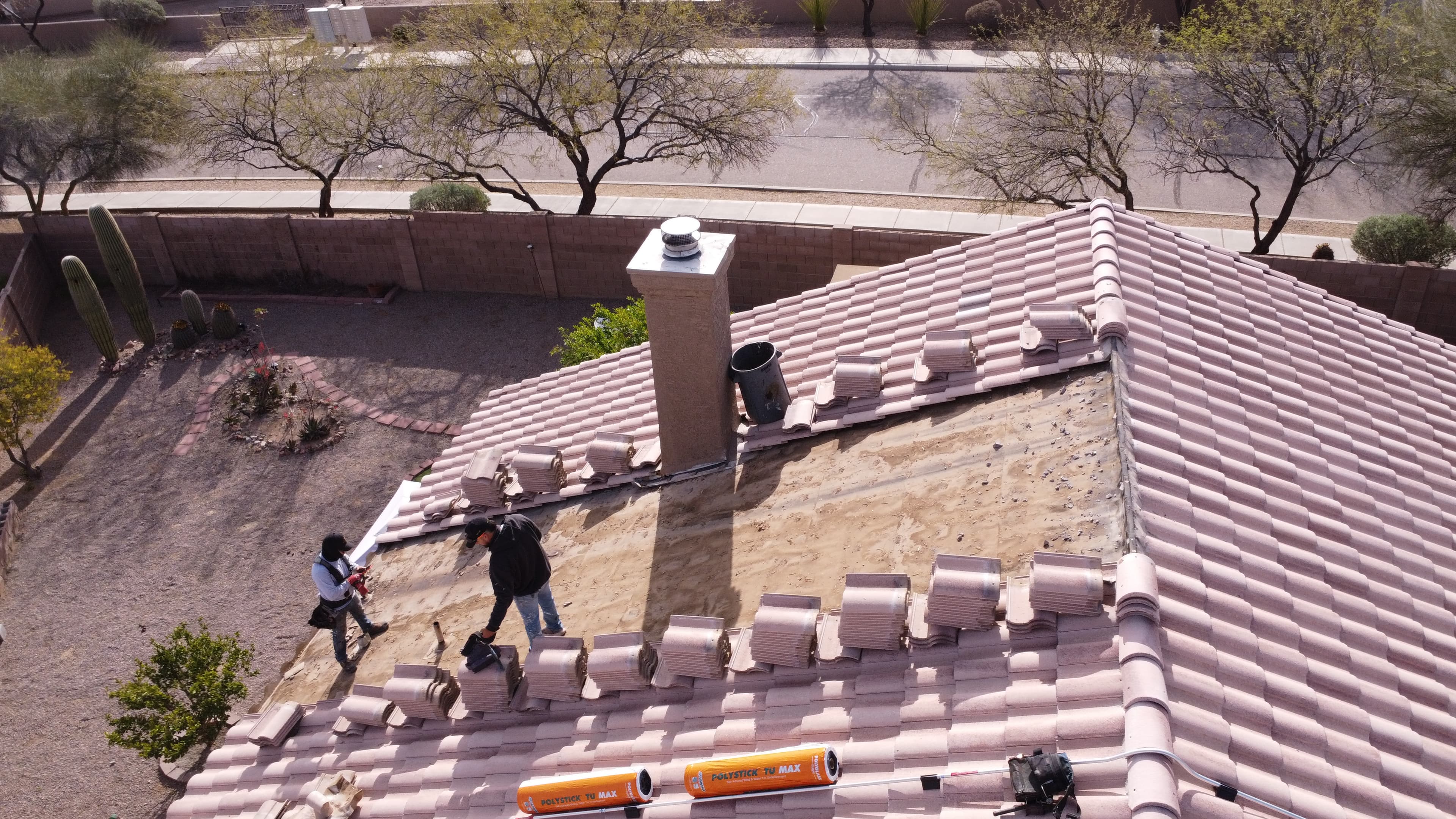
Services/Flat-roof coating/Catalina Foothills
Flat-roof coating in Catalina Foothills.
Pima County (unincorporated), Arizona
Flat-roof recoats and replacements for older Sonoran-style customs in the Catalina Foothills — Sabino Canyon-area built-up roofs and the higher-end commercial along Sunrise and Skyline.
In short
Flat-roof coating in the Catalina Foothills is concentrated on older Sonoran-style customs (1960s–1980s build with built-up modified bitumen on wood decks) and on higher-end commercial along the Sunrise and Skyline corridors. Most Foothills flat-roof work we do is on substrates that have been recoated multiple times across decades, where careful core-sample testing is necessary to figure out recoat-vs-replace. Class A ember-resistant coating systems are our default for properties along Sabino Canyon and the higher Foothills corners — same cost as standard high-grade, significantly better fire resistance.
Why this work, here
Flat-roof coating in Catalina Foothills is its own thing.
Field notes —
Why Coronado, here
Why hire Coronado for flat-roof coating in Catalina Foothills.
Specific to this combination — not generic family-owned-and-insured filler.
Patient core-sample testing on multi-recoat substrates.
Older Foothills Sonoran-style customs have been recoated three, four, or even five times across decades. We pressure-wash and core-sample test the substrate before recommending recoat-vs-replacement. Surface visual inspection alone doesn't tell the whole story on a multi-recoat substrate.
Class A ember-resistant systems for fire-zone properties.
Properties along Sabino Canyon and the higher Foothills corners are in wildland-urban interface zones. Flat roofs are particularly susceptible to ember accumulation in WUI fires. We default to Class A ember-resistant coating systems for these addresses — same cost as standard high-grade, significantly better fire resistance.
Higher-end commercial discretion along Sunrise and Skyline.
Foothills commercial flat-roof work — retail, restaurants, offices serving the Foothills market — needs minimal disruption to higher-end clientele. We schedule install during off-peak hours, keep the site quiet and clean, and complete walkthroughs without occupying the parking lot for days.
Pricing
What shapes the price.
Foothills flat-roof pricing varies by scope. Older Sonoran-style residential recoats over a sound substrate are the cheapest path. Full tear-off-and-replacement on a 50+ year-old built-up substrate runs higher. Higher-end commercial along Sunrise and Skyline scales by square footage and access. Class A ember-resistant systems for WUI properties don't add cost over standard high-grade. Drone plus on-roof core-sample testing is free with any quoted work.
Full flat-roof coating pricing breakdownProcess
How it goes in Catalina Foothills.
- 01
Drone + multi-location core testing
Drone reads the whole roof. On-roof core-sample testing at multiple locations because multi-recoat substrate condition varies across the surface.
- 02
Recoat-or-replace recommendation
Within 48 hours: written assessment with substrate condition, recommended path, and (for WUI properties) ember-resistance documentation.
- 03
Itemized quote
Written quote with materials, labor, calendar timeline. Class A ember-resistant systems by default for WUI addresses.
- 04
Substrate prep + install
Pressure-wash, repair blisters and cracks, address ponding, apply system per spec. For replacements: tear-off, decking, new system install.
Flat-roof coating in Catalina Foothills — questions.
Specific to this combination — pricing, timing, materials, local conditions.
01Why is flat-roof work different in the Foothills than basin Tucson?
Two factors. First, the substrates here are typically older — many 1960s–80s built-up systems on wood decks that have been recoated multiple times. Patient core-sample testing is necessary. Second, the fire-zone factor: properties along Sabino Canyon and the higher Foothills corners are in WUI zones where Class A ember-resistant coating systems are the right default. Same cost as standard high-grade; significantly better fire resistance.
02Multi-recoat older Foothills Sonoran homes — how do you decide recoat vs replace?
Substrate condition. We pressure-wash and core-sample test multiple locations across the roof. If the substrate is sound (no widespread blistering, no soft spots, no wood-deck rot), recoat works and lasts 8–12 more years. If the substrate is failing, full replacement is the better long-term call. We quote both options where applicable.
03Do you do Class A ember-resistant coating systems for WUI Foothills properties?
Yes — and we default to them for any property along Sabino Canyon or the higher Foothills corners that's in a wildland-urban interface zone. Same cost as standard high-grade coating systems, significantly better fire resistance. We also recommend annual debris cleaning to keep ember-resistance specs in force.
04How often do Foothills commercial flat roofs along Sunrise and Skyline need recoating?
Every 8–12 years for reflective coating reapplication, sometimes earlier in higher-UV exposure positions. Foothills elevation makes UV slightly more intense than basin Tucson, so we generally recommend toward the shorter end. Annual inspection catches blisters and seam wear before they become leaks.
05Pima County permits for Foothills flat-roof work — what's the timeline?
The Foothills is unincorporated Pima County, so permits go through the County. Residential roof permits typically issue in 3–7 business days; commercial in 5–10. Simpler than Oro Valley because there's no separate Town review on top.
Other services
More in Catalina Foothills.
- Tile re-roof in Catalina Foothills
- Shingle re-roof in Catalina Foothills
- Metal roofing in Catalina Foothills
- Seamless gutters in Catalina Foothills
Other cities
Flat-roof coating elsewhere.
- Flat-roof coating in Tucson
- Flat-roof coating in Marana
- Flat-roof coating in Sahuarita
- Flat-roof coating in Oro Valley
Reviewed by —Efren CoronadoOwner & lead estimator, Coronado Roofing. Tucson roofer since 2014, FAA Part 107 drone-certified, federal experience at Fort Huachuca, Sierra Vista AFB, and the Tucson VA.
Last updated —
Got a flat-roof coating need in Catalina Foothills?
Free drone inspection. Honest assessment. No pressure.
Mon–Fri · 7am–5pm·Saturday by appointment